
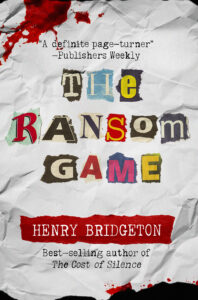
A thriller novel written by Henry Bridgeton and book design by Graham Publishing Group.
For much of the twentieth century, an author’s options for publishing their book were limited. To see their book in print, an author needed a traditional publisher, and by midcentury, likely needed an agent as an intermediary, especially if they wanted to be published by a large publisher.
All of that changed with the advent of ebooks, followed by print-on-demand (POD) for physical books, not to mention the ease with which audiobooks can now be produced. For distribution, an author now has multiple channels available, including Amazon and other online retailers, as well as access to physical bookstores and libraries using IngramSpark, which distributes self-published books via Ingram Content Group, the largest book distributor in the U.S.
With self-publishing easier than ever, should authors even consider traditional publishing? While Graham Publishing Group specializes in helping authors self-publish their books, we feel every author should go into the decision with open eyes.
Worth considering are the following:
- Timing. If you want your book out quickly, self-publishing is the way to go. The typical timeline for a traditionally published book, from signed contract to release date, is 12 – 18 months. That’s after the author finds an agent, and the agent gets the author a contract with a publisher. Self-publishing, in contrast, can generally be completed within a few months.
- Presence in physical bookstores. IngramSpark makes it easy for bookstores and libraries to order your self-published book, but that doesn’t mean these entities will automatically stock your book. Considerable marketing has to be done (by the author and/or a marketing company the author hires) to create sufficient buzz for most bookstores and libraries to order copies.
- Upfront costs and recouping expenses. Self-publishing incurs upfront costs, but if the author sells sufficient copies, these costs can often be recouped. Self-published authors who write a series and/or use their books to generate other income streams (consulting, professional speaking engagements, and so on) tend to recoup their expenses more quickly than those who do not engage in these activities. In contrast, traditional publishing costs the author nothing upfront, and sometimes traditional publishers pay an advance on royalties – but there is no guarantee the book will “earn out” the advance and that the author will ever earn additional royalties.
- Rights. Traditional publishers retain most, if not all rights to the book. For example, a traditionally published author often cannot sell subsidiary rights to an audiobook company or an international publisher; such deals are brokered by the publisher, at their discretion. If a traditionally published author wants to re-release their book as a self-published book at some point, they often have to purchase the rights from the publisher. In contrast, a self-published author retains all rights to their book.
Which path is right for you and your book? Only you can make that decision, but if you’re unsure, our team is happy to discuss options with you. If you decide to move forward with self-publishing, Graham Publishing Group can turn your manuscript into a high quality, professionally designed book, both in print and ebook. We’re also happy to assist with all other aspects of self-publishing. Additionally, if you choose to work with us, keep in mind that you retain 100% of your rights and royalties, and you’re never locked into a contract.
Ready to chat? Please get in touch! We’d love to learn more about your book and help you make the best decision for getting it into the hands of readers.